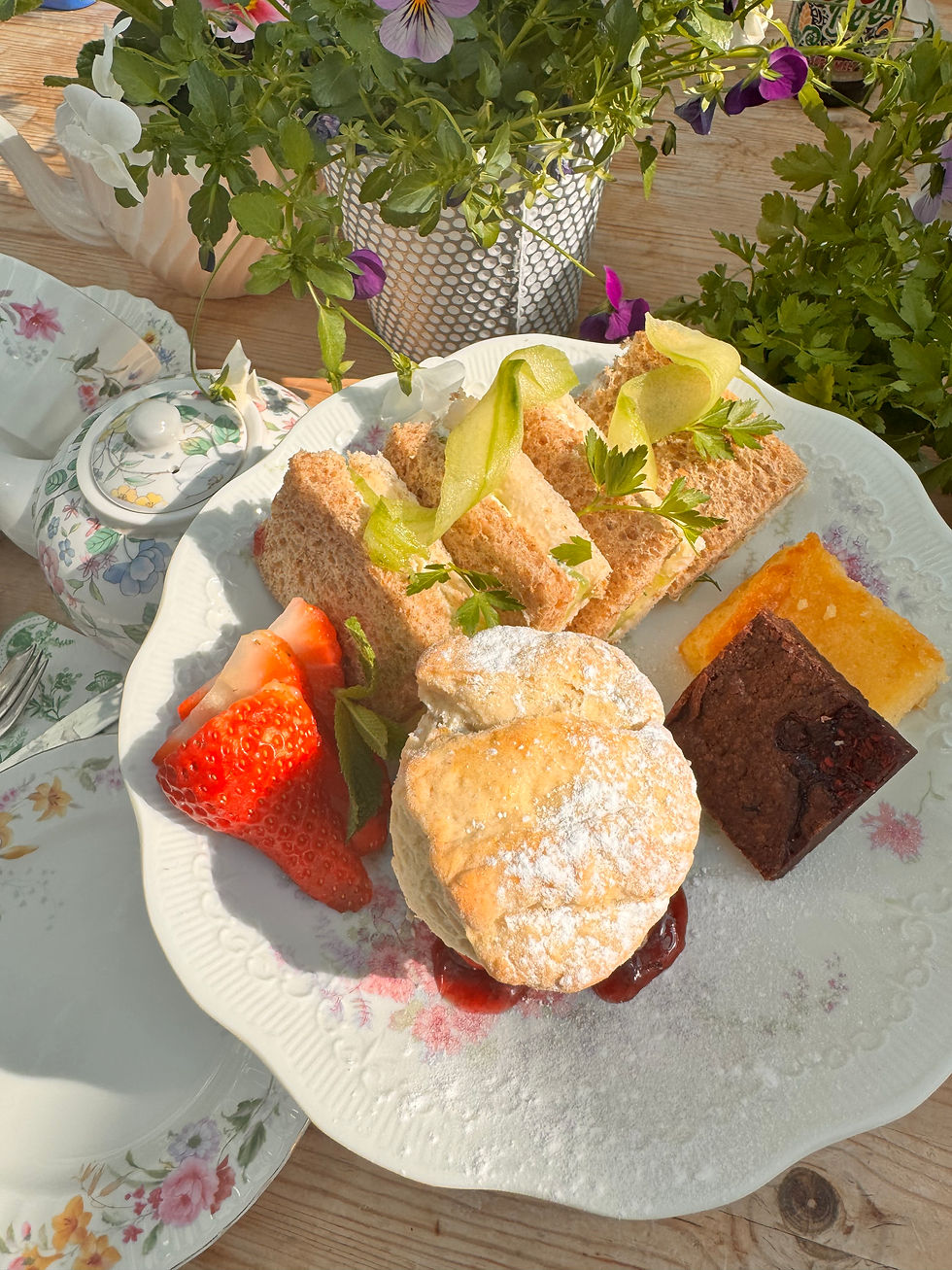
Making Low-Sugar Cakes and Afternoon Teas

Why choose Lower-sugar alternatives for cakes and afternoon tea?
I know what you're thinking! How can someone who loves baking cakes bear to reduce sugar? It's impossible to completely cut out sugar in baking as sugars serve various purposes as well as providing the all-important sweetness associated with cake. However, we can still make changes that can significantly reduce the amount of sugar we're consuming. And I'm happy to do that when I'm catering for afternoon teas.
I love sugary treats and often crave something sweet after dinner. However, I'm realising that for many women of menopausal age, sugar is not a good companion to our changing bodies. Did you know that reduced oestrogen can make us more insulin resistant - leading to weight gain and mood swings, amongst other things? Research also suggests it can make us more gluten intolerant too.
There is plenty of support online for menopause and I'm a big fan of Menopause Support, a not-for-profit community-interest company - why not check out their website?
Don’t get me wrong though, I will still have a sweet treat but when I have a treat, I make sure it’s special and in a gorgeous setting. I love going for afternoon tea and I’m not going to waste my limited treat time on a mediocre cake or scones. And neither should you!
Who is my lower-sugar and sugar-free baking good for?
I offer lower-sugar and sugar-free alternatives because I recognise the need for healthier options. It's relevant not just for peri-menopausal and menopausal women, it helps anyone who needs to lower their glucose levels - or just eat more healthily. Some guests at our tea parties are diabetic or recovering from debilitating illnesses - and we don’t want them to feel left out either.
Why do we crave sugar?
The basic answer is that sweet foods meant survival to our ancestors as they provided high energy to help us survive in difficult situations. Our brains are wired to feel good when we eat sugar and they don't switch off the craving when our bodies have had enough. When we can't get sugar we find more imaginative ways to still eat sweet things. During World War 2, sugar was rationed. Many people used alternatives in their bakes and puddings including beetroot, carrots, and angelica. They had to be creative gardeners as well as knowing their wild herbs!
Luckily, we can train our palate to get used to a less sweet taste and after a while sugar will seem too sweet. So you might need to give yourself time to adjust if you try any of the ideas below.
Low-Sugar Afternoon Teas
A low-sugar afternoon tea shouldn’t mean sacrificing taste and flavour. You just need to be prepared to adjust your expectations. Here are some examples of the ways we can offer lower-sugar alternatives that are still absolutely delicious:
lower-sugar savoury options
Bread can contain added sugar, especially processed shop-bought bread. You could of course bake your own bread, but a tasty swap is to create hors d’oeuvres such as:
A wholemeal wrap rolled around turkey and tomato chutney and sliced into 2-cm-thick rounds. Keep the rounds together with a cocktail stick but do warn your guests that it’s there!
Ditch the bread completely and use lettuce or cucumber instead as a wrap for protein such as prawns or sliced egg and spring onion.
Two slices of cucumber with peanut butter in the middle
Dill, cream cheese, and salmon filling between two slices of cucumber
An open top rye crispbread with homemade grated carrot and red cabbage slaw
Low sugar scones
There really is nothing like a traditional home baked scone, warm from the oven, cut in half and topped with delicious clotted cream and thick strawberry jam. For a healthier version, you might have to slightly reframe what you expect from a scone.
Fruit & vegetable sugars
Halving the amount of sugar in a scone recipe will not affect its texture too much. However, you could even choose to roast some pear and purée it to add to the scone mixture to replace the sugar. Because the pear contains fibre, sugar is released more slowly into your bloodstream than refined sugar would be.
If pears are not in season, you might need to treat yourself to some dates and add those sparingly to your scone. Blend the dates before adding them. Dates would also go well with some grated carrot.
Remember, if you add a 'wet' ingredient like roast pear or carrot or even dates, you'll need to reduce the amount of milk you add.
Get creative with the jam on your scones
Pure clotted cream itself is actually very low in sugar (about 0.7g to 2.3g of sugar per 100g depending on the brand). This is naturally occurring lactose which is a milk sugar. A good dollop of clotted cream can substitute butter, which is why I always put cream first onto my scones – please don’t judge me!
Traditional jam contains at least as much sugar as fruit and so can create a huge sugar spike. If you really want the jam, you could reduce the sugar in your scones to the absolute minimum and use the jam as the main sweetener.
Make a very low sugar jam. You need the sugar to thicken the fruit but if you’re not worried about it thickening and staying preserved, homemade jam can be made with one part sugar to two parts fruit.
Chia jam is also delicious - just blend two tablespoons of chia seeds and two cups of fresh strawberries or raspberries to a jam consistency and leave it for ten minutes or so before using. Just remember it doesn't last long but you should be able to keep it for a few days in the fridge.
Ditch the jam completely and top with sliced strawberries instead.

Reducing the sugar in cakes
You could use plant based sugars such as erythritol, xylitol, or stevia. Each sugar has different qualities and need to be used carefully: don't think you can replace them weight for weight, or that they'll behave in the same way. A recipe book I would recommend for natural sugar baking is Sweet Vegan by Nicole Maree. The recipes in this book give you wholesome ways to sweeten bakes such as brownies, cupcakes and cookies.
Tea or coffee - without sugar
Some people have got so used to having sugar in their tea that they’ve forgotten what tea tastes like. In my opinion, a great loose leaf tea doesn’t even need milk. We buy our tea from Tealicious Ltd and their tea has a gorgeous flavour. I find that milk spoils the taste of a delicious tea.
finding more information online
There are plenty of sites offering sugar-free baking recipes but, unfortunately, they tend to replace refined sugar with sugar alternatives. I'm not convinced that the sugar alternatives are firstly, environmentally friendly, or secondly, a healthier option. The BBC Good Food Guide to Sugar-free Baking provides some interesting information about using sugar in baking. Emma Hollingsworth, Mrs Hollingsworth on Instagram, is excellent at creating sweet treats that reduce the use of refined sugar.
looking for a lower-sugar cake or afternoon tea?
Just get in touch if you're looking for an afternoon tea experience that takes your sugar consumption and other dietary requirements into account (we do gluten free and so on too). We cater for parties and deliver afternoon-tea boxes in the Woking and Surrey area. Afternoon tea doesn't have to be bad for you!